
Camaron Stevenson is a national correspondent for “COURIER” and Founding Editor of “The Copper Courier”. Cam also publishes the “Below the Beltway” Substack.
Local opposition kills seven warehouse deals
Overwhelming backlash over Immigration and Customs Enforcement’s plan to convert industrial warehouses into massive detention camps has killed plans for at least seven locations so far, even as the Trump administration expedited its plans to open internment camps on military bases.
ICE originally set its sights on 23 warehouses across the US for potential use as detention sites, with the goal of more than doubling its current detainment capacity of 70,000. Those plans were almost immediately thwarted, however, as opposition from community members, elected officials, and even warehouse owners effectively barred ICE from seven of those locations.
DHS moved forward with its plans anyway, and secured warehouses in nine other locations — in almost every instance, against the wishes of the local communities. In some of these cities, such as Surprise, Arizona, and Socorro, Texas, local leaders are now exploring ways to prevent ICE from using the purchased warehouses as detention centers, citing various permitting regulations and public nuisance laws.
“Socorro held a city council meeting to discuss their next steps and their options. They were not informed, by the way, that this is what DHS would be doing. They learned about this through the media, and I alerted the mayor about what was going on,” said US Rep. Veronica Escobar (D-TX). “Cities that have ordinance-making authority, they have more power than a lot of folks understand. And I think in moments like this, they need to utilize all of their power.”
Below is a brief update on the Trump administration’s use of warehouses since the initial Feb. 3 reporting:
Two more locations stalled by local efforts
Merrillville, Indiana
Democratic US Rep. Frank Mrvan wrote DHS a letter in opposition, the town council voted unanimously against the facility, and the warehouse owners stated they had no plans to sell to any federal agency.
Byhalia, Mississippi
Due to community backlash, and opposition from US Sen. Roger Wicker, ICE has abandoned plans to develop a detention camp in Mississippi.
Three sites pending, purchased, or already in use
Hall and Walton Counties, Georgia
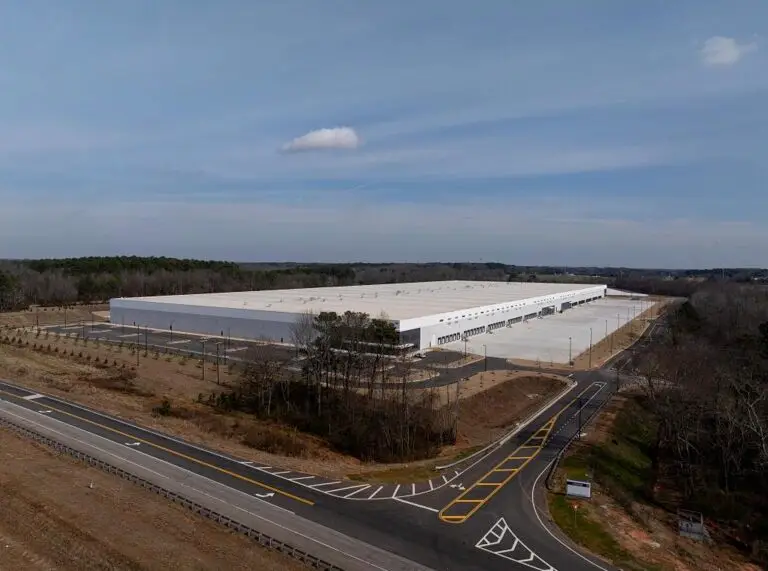
Despite fierce community opposition, ICE purchased a facility in Social Circle in early February. If it follows through with its initial proposal to hold 8,500 people there, the detained population would exceed that of the small town itself.
Hall County officials also confirmed that DHS’ purchase of a smaller warehouse just north of Social Circle would be finalized by the end of February.
Chester, New York
Despite vocal opposition from residents, ICE appears to be moving full steam ahead with its plans to set up camp in Chester — and, in fact, has already secured access to a warehouse owned by billionaire Carl Icahn. Icahn’s relationship with Trump goes way back, as first reported by The Oracle’s Felix Hoffman, and appears to have charted the course Elon Musk later trekked.
Icahn was a mega donor during Trump’s 2016 campaign who funneled at least $150 million to him through a Super PAC. He was later considered for US Treasury Secretary, but ultimately settled on being a special advisor, where he gained a reputation for ransacking the federal government to increase his personal wealth.
A map of all 23 proposed warehouse detention camps is available here and will be updated weekly on Fridays.
Renewed opposition at two already-purchased warehouses
Surprise, Arizona
Residents were taken by — well, surprise — at ICE’s plan to use an industrial warehouse down the street from a high school as a detention camp. According to the Arizona Mirror’s Gloria Rebecca Gomez, more than 1,000 people attended a recent city council meeting in protest, where council members admitted they had not been consulted prior to the purchase.
Arizona Attorney General Kris Mayes announced plans to file a public nuisance lawsuit aimed at blocking the facility’s operation. Public nuisance laws are a unique and effective tool allowing state officials to impose checks on activities deemed harmful to public health or safety. Mayes has previously utilized them to stop out-of-state and foreign farms from siphoning away millions of gallons of the state’s groundwater reserves.
“As Arizona’s top law enforcement officer, I have authority to compel the abatement of activities considered a public nuisance due to being ‘injurious to health, indecent, offensive to the senses, or an obstruction to the free use of property that interferes with the enjoyment of life,’” Mayes wrote in a letter to Noem. “I note with approval your statement on the DHS website, that ‘through technical support, training, and oversight, DHS limits liability by ensuring continuous compliance with federal, state, and local laws.’”
Socorro, Texas
After DHS purchased warehouses and over 60 acres of land in Socorro for $123 million, the city council voted to use whatever authority they have to impede the use of the site as a detention facility. While the state gives broad authority to the federal government, Socorro officials say they plan to wield safety, permitting, and zoning laws as weapons to stall ICE at every turn.
Plans to expand military detention sites
The Trump administration appears to now be moving forward with a detention plan that circumvents the combination of public input and local regulations that have hampered its warehouse scheme. As first reported by Migrant Insider’s Pablo Manríquez, the Department of Defense put out an eight-year, $55 billion contract to build permanent detention infrastructure on newly-designated militarized zones.
While the contract is broadly framed as providing logistical support for the US Navy, the contractor is required to provide beds, tents, catering, and detention guards at the request of DHS. It also specifies that its intention is to protect the government’s territorial integrity, and prohibits the housing of “any non-ICE population at the facility.” It would also allow ICE to bypass any bidding processes, public input, and local regulations that have slowed the administration’s mass incarceration plans thus far.
The arrangement echoes past uses of military bases for the incarceration of Japanese Americans during World War II, when the government abducted civilians based on their ethnicity and detained them for an undetermined amount of time. The conditions, however, more closely mirror Nazi concentration camps, as those currently held in ICE custody are stripped of their rights, beaten, sexually assaulted, and either left to die or are outright killed by prison guards.
“People are not goods to be stored,” said Escobar. “I was afraid this was going to happen. When the ICE director said he wanted ICE deportations to be like Amazon Prime. That we have a government — that the United States of America is talking about human beings this way — processing and holding, detaining and deporting — it should offend everyone’s sense of humanity.”
While the $55 billion contract is new, attempts to militarize incarceration is something Trump has been trying to do since he regained the presidency. Bases in Indiana and New Jersey were approved last year as potential DHS detention sites, though neither site is being used to hold people as of yet. The only known base to currently act as a detention center is Fort Bliss in Texas, where physical abuse and sexual assault runs rampant.
The Trump administration made a similar plan to erect a military prison camp at Travis Air Force Base in Fairfield, California. But where it succeeded in Texas, it failed in California. The Travis facility was stopped in its tracks last year by community opposition, spearheaded by US Rep. John Garamendi (D-Calif.).
“They wanted to build a major detention facility on the base that is already overcrowded — and I said, ‘hell no! You’re not going to do that. We’re not going to allow you to further degrade the ability of the military to do its national security job,’” said Garamendi. “We did stop them there, and that fight hopefully is over.”
True to form, the Trump administration had attempted to develop Travis into a detention center without alerting the public. That all fell apart when Garamendi got wind of the proposal and immediately alerted both the public and the press. The revelation set off weeks of protests and demands from local residents that ultimately forced the administration to abandon its plans.
Garamendi has since taken efforts to deter ICE even further, and in February, introduced legislation to freeze funding for the agency altogether. The measure would provide a long-term solution to a problem that could result in another partial shutdown of the government, as Republicans in Congress not only refuse to cut funding for ICE, but wish to increase its budget.
“It should be obvious to all Americans that ICE is a major problem, and there are many different ways we can deal with it. One way is to ice. ICE. Don’t let it grow any longer,” Garamendi said. “The secretary [Noem], together with the ICE management, is surging thousands of paramilitary troops into our cities and creating enormous chaos and death, and just totally ignoring the constitutional requirements of notice, of people’s right to a lawyer, breaking into houses without a judicial warrant. The fact of the matter is that ICE is out of control.”
While the bill doesn’t address the Trump administration’s use of the military budget for its anti-immigration efforts, it would render those endeavors moot, as ICE would be prohibited from increasing its capacity to hire agents and abduct civilians.
Join COURIER and 3.14 Action on March 12 for MAHA & the Midterms: How Trump and RFK Jr.’s Agenda Costs Americans.
This live conversation will examine how political choices are reshaping healthcare access ahead of the midterms. We’ll break down how Trump, RFK Jr., and the broader MAHA agenda are impacting public health, who benefits, and what’s at stake for families across the country.
Featured Speakers include Dr. Mary Trump, Hank Green, and US Rep. Lauren Underwood.